Tuesday, September 08, 2026

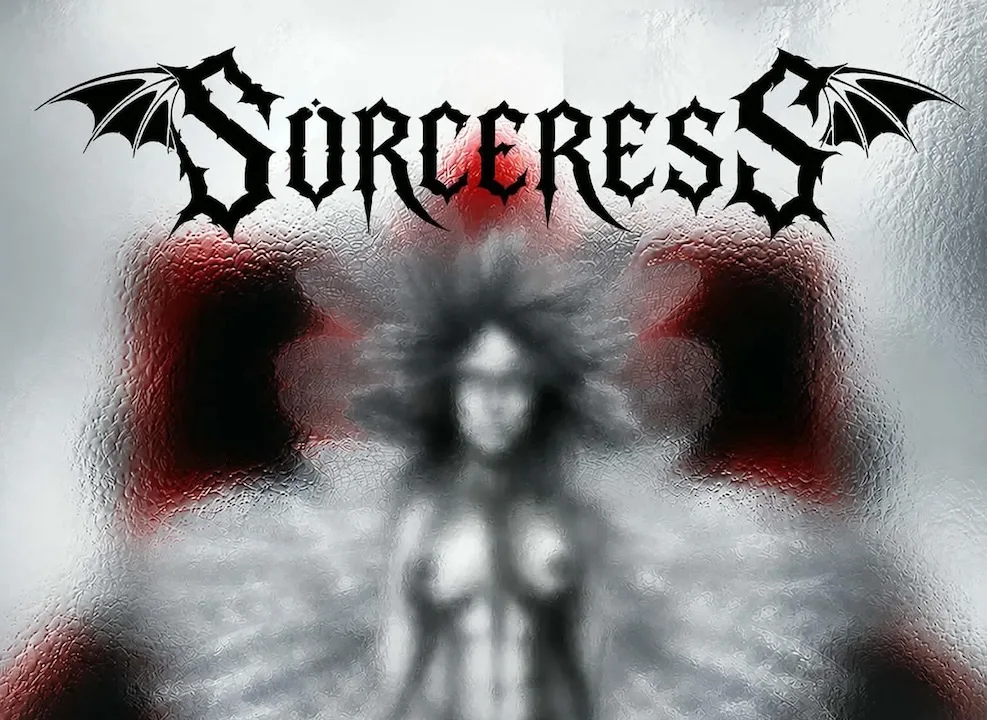
BURNING CHROME | ‘Sorceress’ brings mythology, sexuality and heavy metal into the gallery

katya-sorceress

This article was originally posted here >> https://techsabado.com/2026/08/22/burning-chrome-sorceress-brings-mythology-sexuality-and-heavy-metal-into-the-gallery/

Katya Angara opened her second solo exhibition, “SORCERESS,” on Aug. 18 at The Crucible Gallery at SM Megamall, presenting drawings, paper works, assemblages and mixed-media pieces that move between the human body, animals, insects, feathers and other forms drawn from nature.

“SORCERESS” is on view through Aug. 30.


I wasn’t able to have an in-depth conversation with Katya about the works during the opening, so this is not meant to be a definitive interpretation of her practice. It is a reading of what I saw at the exhibition.


“SORCERESS” was described as a story of initiation, solitude and transformation, drawing, as stated in the exhibition description, from the writings of Carl Jung and Joseph Campbell. It presents the works as explorations of psychological and numinous realms, using myth and metaphor to examine existence, sexuality and the darker aspects of the self. The imagery makes those concerns fairly easy to recognize.


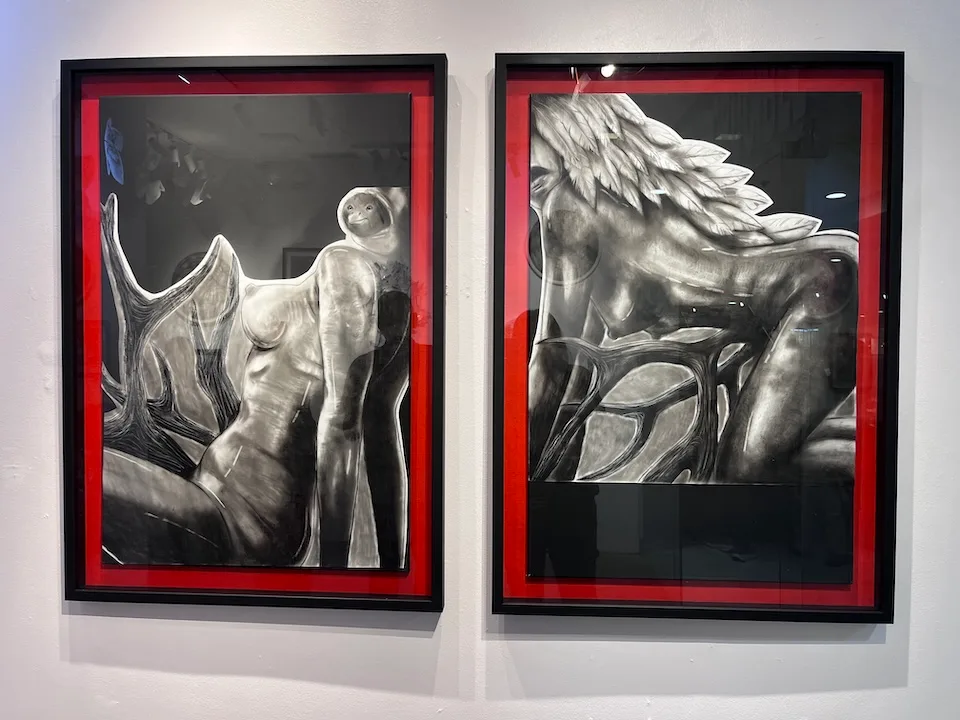
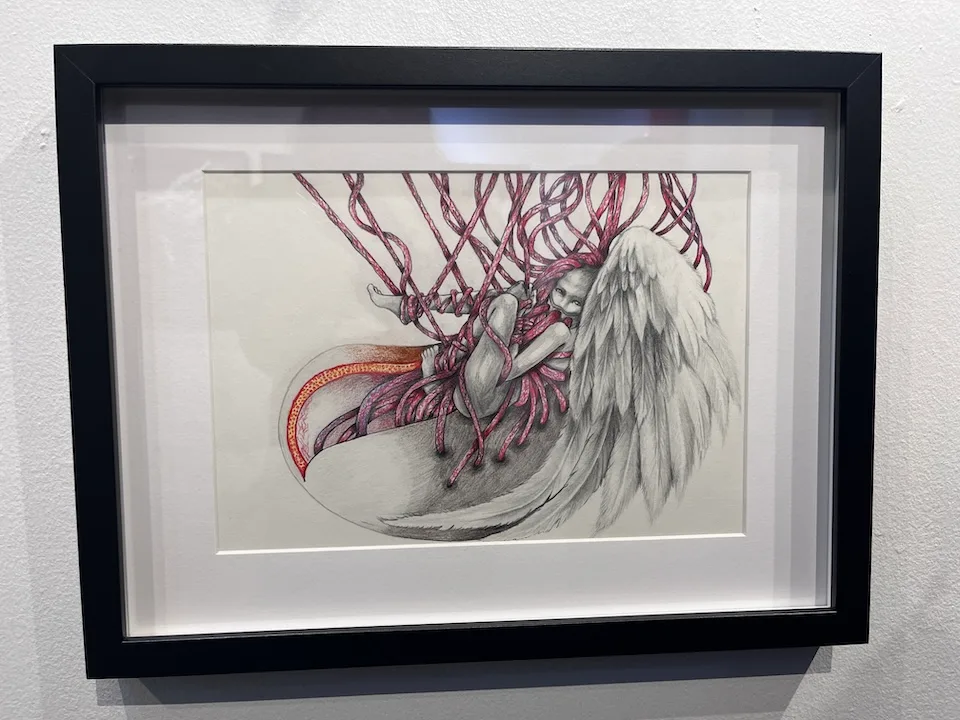
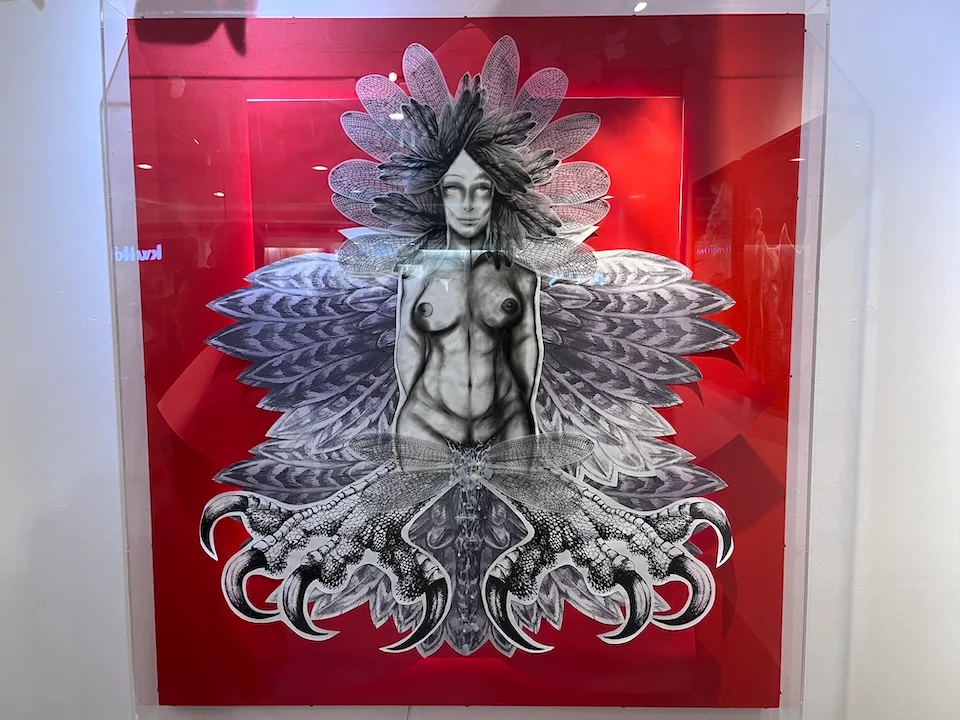
Katya’s female figures are rarely presented as conventional portraits or nudes. They are surrounded, interrupted or transformed by wings, feathers, insects, flowers, antlers and other forms from the natural world. In several pieces, the distinction between human and nonhuman becomes deliberately unclear. That recurring hybridity is one of the exhibition’s strongest characteristics.


The sorceress is not necessarily a single woman or character. She functions more like an archetype that takes different forms throughout the exhibition. The female body becomes a meeting point for animal, insect, plant and human characteristics, making transformation less a dramatic event than a continuing condition.


This continues what Katya has been doing in her art for years. Her practice has moved across drawing, paper art, black-and-white photography and mixed-media experimentation, with recurring interests in nature, sexuality, death, femininity and transformation. In “SORCERESS,” those interests appear to have been brought together into a more elaborate visual system.


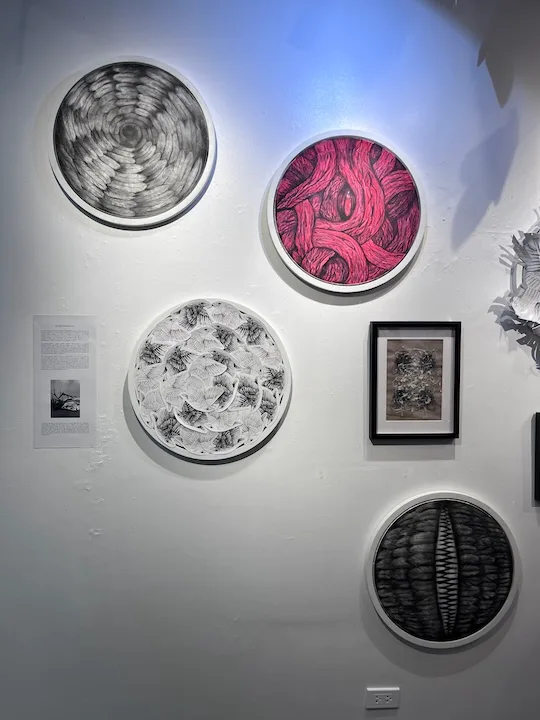
The drawings are particularly striking for their obsessive attention to detail. Feathers, wings, insects and other structures are built through the accumulation of small marks. From a distance, the images can appear delicate; up close, they reveal an intricate density.

There is a useful tension between that delicacy and the more disturbing elements of the imagery. Some pieces incorporate claws, antlers, exposed bodies, tangled forms and intense red shapes that can suggest blood, flesh, wounds or flowers. The result is often beautiful without being entirely comfortable.


Much of the exhibition is dominated by black and white, giving the drawings a stark, almost graphic quality. Red appears as an intrusion, introducing something more physical and corporeal. Depending on the piece, it can suggest blood, sexuality, flesh or biological matter.

The exhibition statement explicitly connects black, red and white with an alchemical process of life, death and rebirth. That interpretation is supported by the imagery, although the pieces do not require the viewer to settle on one literal meaning for the colors.


The circular pieces are another important element. Their repeated feathers and organic forms create compositions that can resemble nests, eyes, cells, flowers or vortices. Instead of directing the eye toward a conventional narrative, the format encourages it to move around the image and repeatedly return to its center. That works particularly well with the exhibition’s stated interest in cycles and Jungian circumambulation.


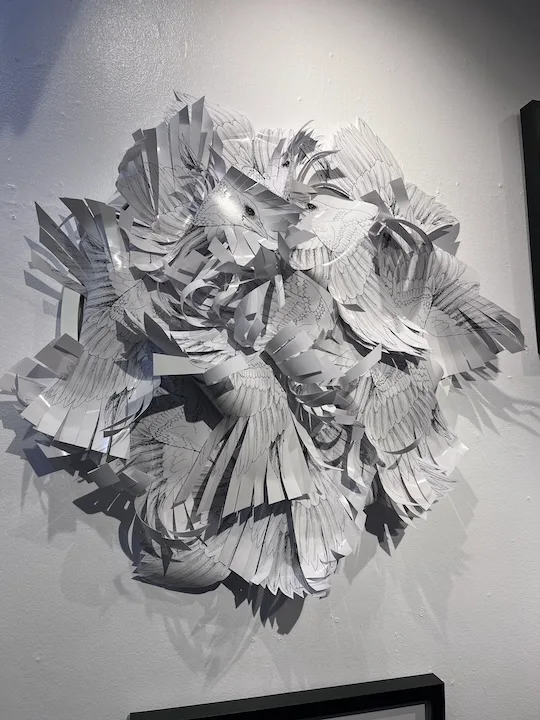
The paper constructions take these ideas beyond drawing. One of the larger pieces consists of layered paper birds and feather-like forms projecting from the wall. The individual elements retain their graphic character while becoming a physical installation. Because they extend from the surface, they also cast shadows. That physical shadow becomes part of the piece. I’m not actually sure if it was deliberate, but it’s there.


Given the exhibition’s explicit interest in the shadow self, this is one of the places where the conceptual framework and material execution come together most effectively. The piece doesn’t merely depict a shadow; its construction produces one.


Katya’s use of paper also emphasizes the physical labor behind the imagery. At a time when elaborate fantasy images can be generated almost instantaneously with software, there is something distinctly analog about these pieces. The feathers have been drawn. The paper has been cut and assembled. Larger forms emerge through accumulation and repetition.

That does not make handmade work inherently superior to digital work, but here the labor contributes directly to the psychological quality of the images.


The visual language also brought back a specific cultural reference for me. During the opening, I remarked to Katya that some of the pieces reminded me of the old Heavy Metal magazine, particularly its combination of elaborate fantasy illustration, sexuality, grotesque anatomy and creatures somewhere between the beautiful and the disturbing.

Katya acknowledged the observation, and it turned out that she is actually into heavy metal, including Iron Maiden.


That exchange made the connection more interesting because the resemblance is not simply visual. Katya’s practice shares some of the older fantasy-art tradition’s willingness to place sexuality, mythology, monsters and elaborate illustration within the same imaginative space.

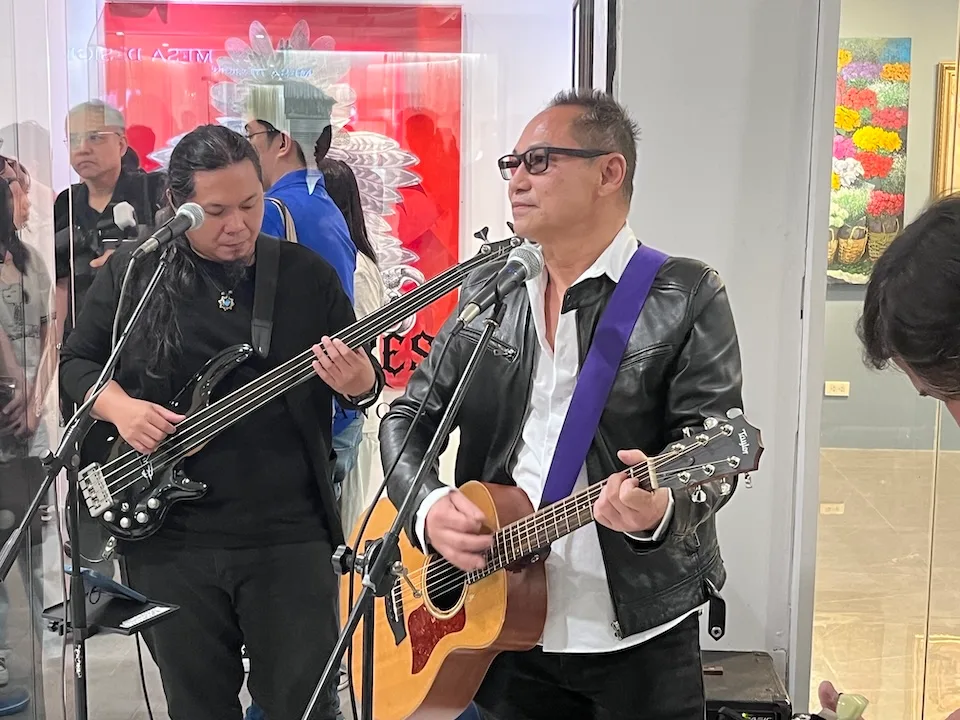
There was, appropriately enough, live rock music at the opening. Stephen Liu, lead of Rizal Underground and one of the veteran figures of Philippine rock, performed a number of rock classics during the evening. Stephen is also an old friend whom I have known since the mid-1980s, so his presence at an art opening brought together two parts of a cultural landscape that have long overlapped but are not always discussed together.


Buddy Trinidad was also there. Buddy is another friend from that older Philippine rock milieu and now a prominent pastry chef, although his history as a guitarist for pioneering punk band Betrayed remains an important part of his place in Philippine rock.


Sari Ortiga, owner of The Crucible Gallery, was of course present. Sari has become a good friend of mine through the local art circle, and as far as I’m concerned, The Crucible has been supporting the alternative scene ever since Ben Cab did the Pinoy Rockstar portraits in the mid-1990s.


I am less interested in taking every Jungian, Campbellian or alchemical reference literally than in looking at how those ideas manifest materially. A woman merging with an insect is visually strange before anyone explains the symbolism. A cluster of feathers forming a circular vortex already suggests movement and repetition. A paper bird projecting a shadow onto the wall creates a relationship between presence and absence. The strongest moments come when those relationships are allowed to operate on their own.


That is also where the Heavy Metal connection becomes useful. The older fantasy-art tradition understood that bodies, monsters, sexuality and mythology could coexist without having to be made respectable or rationalized. Katya similarly allows the erotic, grotesque, natural and supernatural to occupy the same space.


For me, that is the more interesting way to approach “SORCERESS”: not simply as an occult-themed exhibition, but as another stage in Katya’s continuing exploration of the body, nature, sexuality, identity and transformation.


The mythology provides the vocabulary, but the physical pieces make the argument. Their strongest moments come from the collision of delicate craftsmanship with imagery that is simultaneously sensual, biological and slightly unsettling.


In an increasingly automated visual culture, there is also something stubbornly analog about Katya’s process. The repetition, irregularities and physical construction remain visible, giving the pieces a character that cannot be separated from how they were made.


“SORCERESS” ultimately presents the body as unstable and porous, capable of becoming something else. Katya uses drawing, paper and mixed media to make that instability visible.
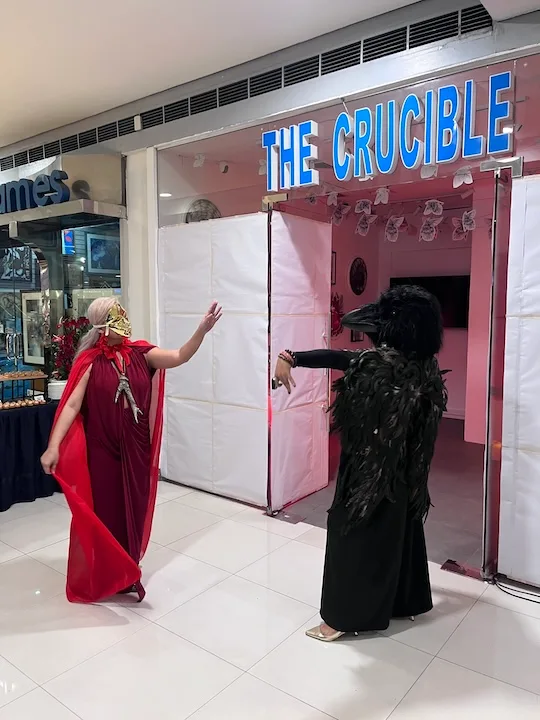
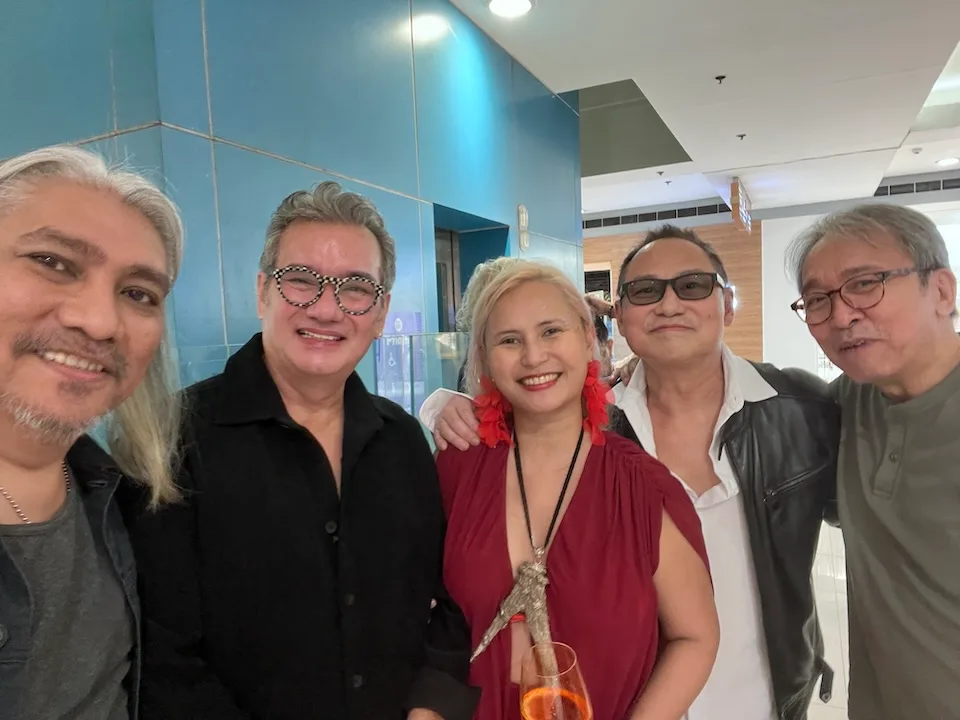

Jing, Buddy, Katya, Stephen, Sari


“SORCERESS” by Katya Angara is on view through Aug. 30, 2026, at The Crucible Gallery, Level 4, Building A, SM Megamall.


This article was originally posted here >> https://techsabado.com/2026/08/22/burning-chrome-sorceress-brings-mythology-sexuality-and-heavy-metal-into-the-gallery/


Tuesday, September 01, 2026

BURNING CHROME | Somatodelic: 'Putting art back to its punk roots'

This article was originally psoted here >> https://techsabado.com/2026/08/08/burning-chrome-somatodelic-putting-art-back-to-its-punk-roots/

The word "punk" has long outgrown its association with distorted guitars, leather jackets and anti-establishment slogans. At its most fundamental, punk was never a musical genre. It was a method of working. It rejected the assumption that meaningful work required permission, expensive tools or institutional approval. It encouraged people to build their own instruments, publish their own ideas, organize their own communities and embrace mistakes as part of the creative process. Its greatest contribution was not a particular sound but a way of thinking that valued experimentation over expertise and curiosity over conformity.

That philosophy came unexpectedly to mind during the opening of Somatodelic, Tad Ermitaño's retrospective at the Ateneo Art Gallery. Bringing together several decades of work in sound art, experimental film, creative mechatronics and coding, the exhibition traces a practice that has consistently treated technology less as a tool than as a medium for investigating perception, interaction and embodied experience. In his remarks, Ermitaño spoke of putting art back to its punk roots—not as a reference to a historical music movement but as a call to encounter art directly, before theory, before explanation and before institutional mediation. The exhibition itself follows that proposition. Rather than asking viewers to decode concepts before engaging with the work, it encourages them to experience sound, movement, vibration and interaction physically, allowing interpretation to emerge afterwards. The accompanying exhibition text describes this as addressing the body first, treating it as an "antenna to disturbances in the environment." Rather than expecting viewers to absorb an artist's statement before encountering the work, Ermitaño reverses the sequence: sensation precedes explanation, allowing interpretation to emerge from direct physical experience instead of predetermined theory.

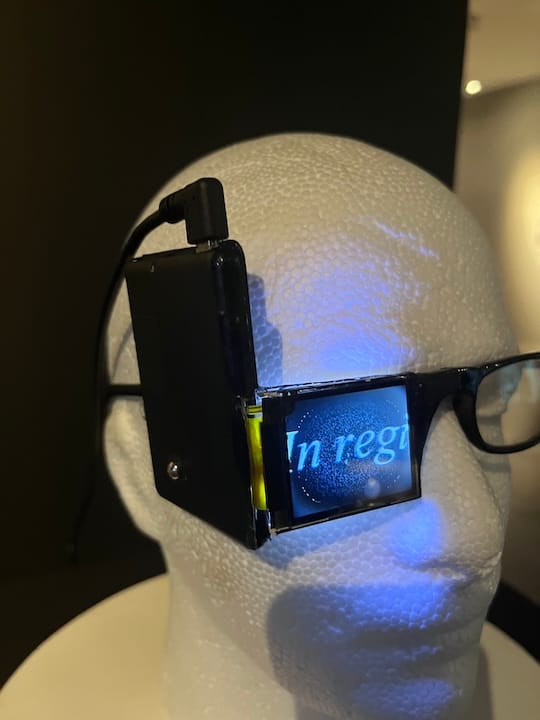
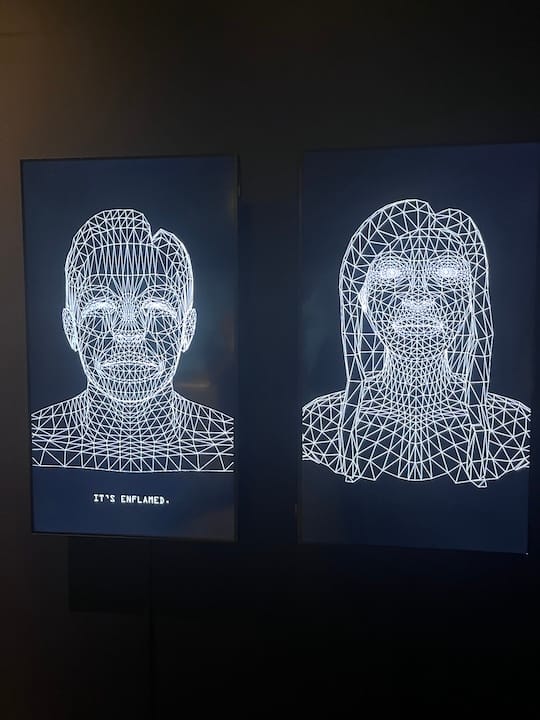
That attitude explains why Somatodelic feels remarkably fresh despite presenting works that span nearly two decades. The exhibition is not driven by novelty, nor does it attempt to impress audiences with technological sophistication. Instead, it presents machines that hum, resonate, rotate, delay, repeat and respond. Guided by algorithmic logic yet refusing mechanical predictability, they listen, react and perform, transforming electronic systems into experiences that are as physical as they are conceptual. As curator Ian Carlo Jaucian observes, Ermitaño's machines do not simply function; they perform. They generate conversations between systems that often appear to acquire lives of their own.

For me, the exhibition carried another layer of meaning. Watching visitors discover these works inside one of the country's leading museums inevitably brought back memories of a very different environment nearly four decades ago. Long before "creative technology," "media art," "maker culture" or artificial intelligence entered everyday vocabulary, a handful of artists in Manila were already experimenting with video feedback, analog synthesis, MIDI, sampling, found electronics, primitive computer graphics and improvised sound. Back then, these practices had no convenient labels. Artists simply worked across disciplines because the boundaries were irrelevant to the work itself. Children of Cathode Ray, the experimental sound art group that Tad and I co-founded in 1989, was never conceived as a band in the conventional sense. It functioned as an informal laboratory where ideas circulated freely between music, film, electronics, programming and visual art. As Tad pointed out in his reply to my congratulatory post on Facebbok, he himself recalled it as "the lab where we tried and applied everything we picked up: synthesis, MIDI, film editing, experimental music, sampling, 3D animation, video feedback."

That history matters because it challenges a common misconception about digital culture. There is a tendency to imagine that experimental technology in art began with high-speed internet, affordable microcontrollers or generative AI. Somatodelic quietly reminds us that artists such as Ermitaño had already been exploring many of the same questions decades earlier, using whatever tools happened to be available. The objective was never technological innovation for its own sake. Machines were stripped of their intended functions and rebuilt as instruments for investigating perception, behavior and human experience.

It is equally important not to romanticize this practice as something entirely unprecedented. Artists have been building works from discarded electronics, hacked consumer devices and self-built machines for decades. Nam June Paik transformed television sets into sculptural media and is widely regarded as the father of video art. Jean Tinguely built kinetic sculptures from industrial scrap that celebrated movement, malfunction and mechanical absurdity. Steina and Woody Vasulka treated electronic signals themselves as artistic material, constructing custom video systems long before digital media entered museums. Within the Philippine context, Lirio Salvador's Sandata series likewise demonstrated that bicycle parts, industrial scrap, stainless steel, electronic components and found objects could become both playable musical instruments and sculptural installations, blurring the boundaries between performance, sound and visual art.

What distinguishes Somatodelic is therefore not the use of discarded electronics or DIY engineering in itself. Those practices belong to a long international—and local—tradition of experimental media and sound art. What has changed is the level of recognition they now receive.

Ironically, contemporary culture now celebrates experimentation precisely because digital technology has become increasingly standardized. At a time when software ecosystems are tightly controlled, consumer electronics are sealed shut, and algorithms increasingly mediate creative production, works built from hacked circuits, improvised mechanisms and visible engineering remind audiences that technology can still be dismantled, questioned and reimagined.

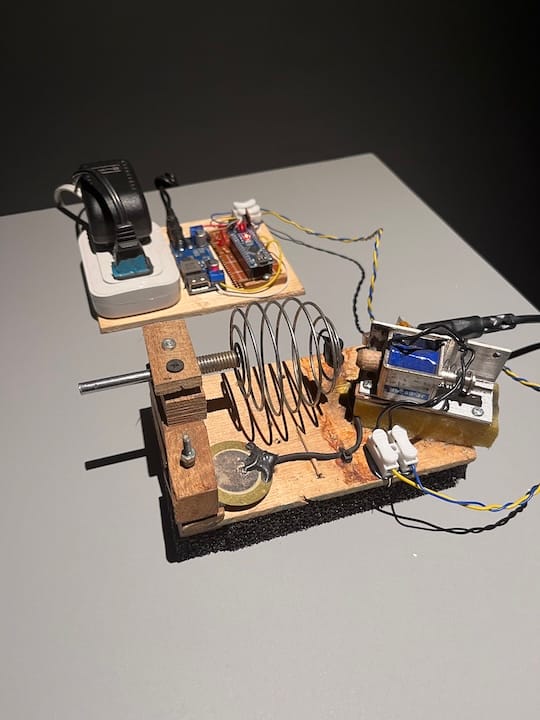
For many years, machines assembled from salvaged electronics, improvised circuitry, kitchen utensils, electromagnets and inexpensive off-the-shelf electronic components, were often viewed as engineering experiments, hobbyist projects or underground cultural activity rather than contemporary art. Somatodelic demonstrates how that perception has evolved. The exhibition does not ask viewers to admire technical ingenuity alone. Instead, it presents these materials as a legitimate artistic vocabulary capable of exploring memory, labor, perception, history and the complex relationship between humans and technology. In that sense, the exhibition is less about validating DIY electronic art than acknowledging that artists working in this tradition have long deserved a place within the history of Philippine contemporary art.

While Lirio Salvador's Sandata transformed industrial scrap into expressive musical instruments rooted in performance, Ermitaño extends a parallel inquiry through cybernetic systems, computational behavior and interactive media. Their methods differ, but both demonstrate that discarded materials can become sophisticated artistic language when guided by a coherent conceptual vision rather than technological novelty.

This continuity becomes visible throughout the exhibition. Bell transforms ordinary household electricity into an immersive sound environment by allowing a suspended metal sheet to resonate with the alternating current flowing through the city itself. Hasa repurposes a bicycle into a manually powered sound instrument, recalling the disappearing trade of the neighborhood blade sharpener while turning repetitive labor into participatory performance. Twinning Machine, first acquired by the Ateneo Art Gallery in 2012, destabilizes the familiar logic of the mirror by fragmenting live video into delays, reversals and interruptions, forcing viewers to confront representations of themselves that refuse to obey real time. None of these works depends upon spectacle. Each begins with familiar materials and patiently reveals unexpected relationships hidden within them.

Perhaps this is where Ermitaño's idea of punk becomes most relevant. Punk has often been misunderstood as rebellion for its own sake, when in reality its most enduring legacy lies in its refusal to separate making from thinking. A homemade synthesizer, a photocopied fanzine, a hacked video camera or a kinetic sculpture assembled from discarded mechanical parts all emerge from the same impulse: to understand the world by taking it apart and putting it back together differently.

Somatodelic embodies precisely that ethic. The exhibition never romanticizes obsolete technology, nor does it celebrate innovation as an end in itself. Instead, it demonstrates that experimentation remains a cultural practice rather than a technological one. Silicon, code, bamboo, bicycle parts, electromagnets and analog circuitry become equal participants in a continuing investigation into how humans construct meaning through interaction with the material world. Even the most sophisticated digital systems ultimately remain rooted in ordinary physical materials. Every chip, screen and circuit begins as silicon, reminding us that contemporary technology is never detached from the material world from which it is built.

Seen from that perspective, Somatodelic is more than a retrospective of one artist's career. It is also an acknowledgment that a significant chapter in Philippine experimental media developed quietly outside mainstream institutions before eventually finding its place within them. What began in improvised studios, underground performances and collaborative laboratories has entered the museum without losing the curiosity that made it possible in the first place.

If putting art back to its punk roots means recovering the freedom to experiment with ordinary materials, discarded technologies and self-built systems without waiting for institutional approval, then Somatodelic suggests that the the institutions have finally begun catching up with practices that artists had been pursuing for decades without waiting for institutional approval.

Tad Ermitaño's Somatodelic is on view from august 5 to october 10, 2026 at the Ateneo Art Gallery.


Full disclosure: All news articles published on the TechSabado website are written by human journalists, unless otherwise specified. Final text editing is also performed by human editors, with artificial intelligence (AI) used only to assist with additional grammar and style guide corrections..SE LIKE our FACEBOOK PAGE and SUBSCRIBE to OUR YOUTUBE CHANNEL.